Non-Surgical & Medical Hair-Loss Treatment
Surgery isn’t the only path. As an AHPRA-registered GP, Dr Alex can assess what’s driving your hair loss and manage it medically — in-house, and in person.
Surgery isn’t the only path. As an AHPRA-registered GP, Dr Alex can assess what’s driving your hair loss and manage it medically — in-house, and in person.
A hair transplant is the right answer for some people — but not everyone, and not always yet. At some hair transplant clinics a doctor plans your procedure but isn’t necessarily in the room while it’s carried out. Here it’s different: your procedure is led in person by Dr Alex, an AHPRA-registered doctor, who personally performs it alongside his trained team. And because he’s a doctor, he looks at the whole picture, not just the surgery: what’s causing your hair loss, whether it can be slowed or stabilised, and whether an operation is the best step at all — now, later, or never.
For many people, a considered medical approach protects the hair they still have and buys time before any decision about surgery. For others, it works hand-in-hand with a transplant to help keep the surrounding hair healthy. Either way, it starts with an honest, individual assessment.
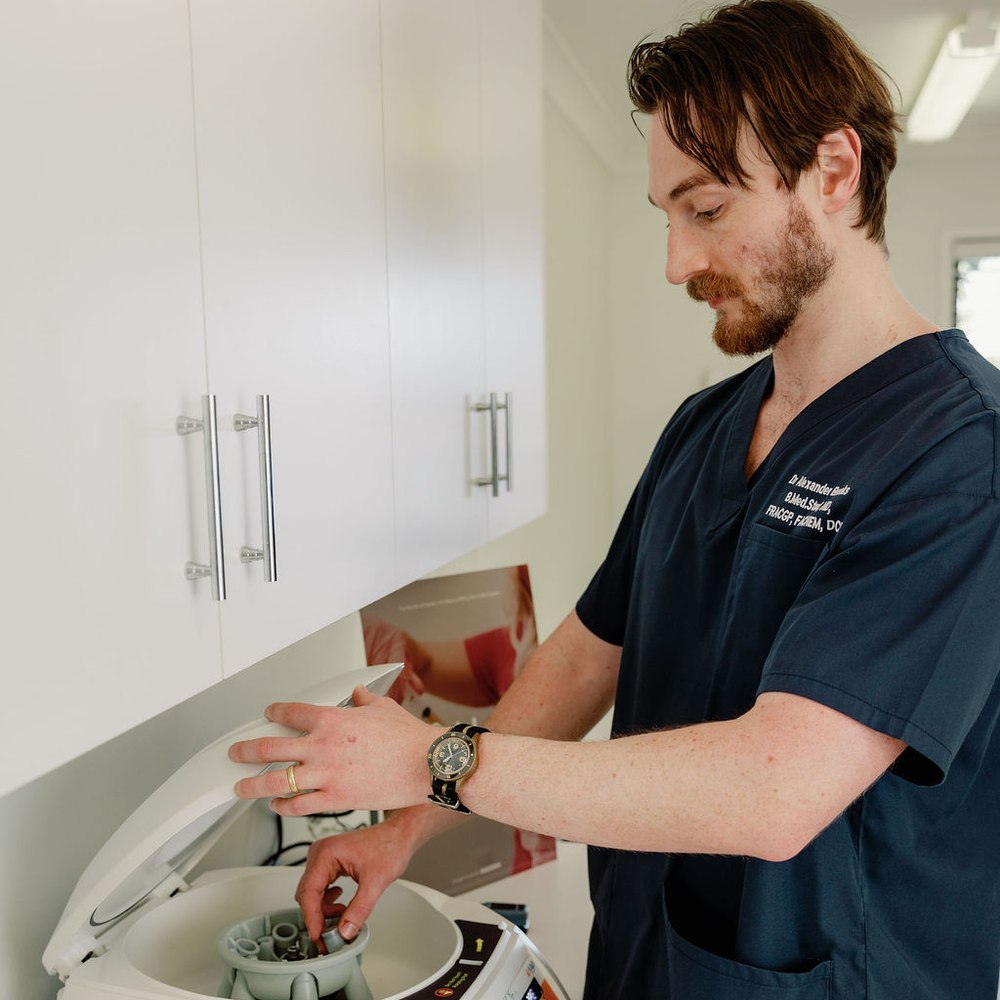
Doctor-led, in person
Because Dr Alex is an AHPRA-registered doctor, any non-surgical or medical treatment is assessed and, where appropriate, prescribed in person — from the initial workup through to follow-up — as one considered plan rather than an off-the-shelf product.
Is this you?
A medical, non-surgical approach is often the sensible first conversation if you recognise yourself here.
You’ve noticed thinning recently and want to act early to protect what you have, before considering surgery.
Your hair loss still seems to be progressing — stabilising it first often leads to a better long-term result.
You may be too early for a transplant, or better suited to a non-surgical path for now — and you want an honest view.
You’ve had, or are planning, a transplant and want to help keep the surrounding, non-transplanted hair healthy.
You’d rather begin with the least-invasive option and keep surgery as a considered next step, not a first move.
You want a doctor to look at why it’s happening — not just be sold a procedure.
The Approach
Every plan is individual and decided at your consultation. Depending on what’s driving your hair loss, it may include some of the following.
Dr Alex assesses your scalp, hair and history to understand the likely cause of your hair loss — because the right treatment depends on getting that right. Some causes respond well to medical treatment; some don’t, and he’ll tell you honestly either way.
Where medical treatment is clinically appropriate, Dr Alex — as an AHPRA-registered GP — prescribes and manages it himself, in person at the clinic. He explains the options, what to expect, and any potential side effects, so you can make an informed choice.
Depending on your assessment, your plan may include in-clinic or topical measures to support scalp and hair health. What’s suitable for you — if anything — is decided together, based on evidence and your individual circumstances, never a one-size-fits-all package.
Good outcomes come from consistency and follow-up. Dr Alex reviews how you’re responding over time and adjusts the plan as needed — the same doctor, start to finish.
Not either/or
A transplant relocates hair; it doesn’t stop ongoing thinning in the hair around it. That’s why many patients combine a considered medical approach with surgery — to help protect their existing hair while the transplanted hair grows in. Because one doctor oversees both sides of your care here, your plan stays joined-up rather than split between people who never speak.
Why it matters
The difference here is continuity. The doctor who assesses you is the doctor who treats you, prescribes for you (where appropriate) and reviews your progress — in the same building, from first consultation through follow-up. It means fewer gaps, clearer advice, and a plan that’s genuinely yours.
The information on this page is general in nature and is not medical advice. Whether any treatment — surgical or non-surgical — is suitable for you can only be determined at an individual consultation with an AHPRA-registered medical practitioner. Medical treatments carry potential benefits and risks, which Dr Alex will discuss with you. Results vary between individuals and are not guaranteed.
Start with our free 3-minute hair assessment, or email us for a no-obligation chat. Dr Alex will give you an honest view — surgical, non-surgical, or simply keeping an eye on it for now.
Take the free assessment → Email us