Hair Transplant Recovery: Tips for Smooth Healing
What to expect week by week after an FUE procedure — and the simple habits that protect your new grafts.
What to expect week by week after an FUE procedure — and the simple habits that protect your new grafts.
A hair transplant is an exciting step, but the result you see at twelve months is shaped in large part by how you look after your scalp in the first two weeks. The good news: FUE recovery is usually straightforward, and most people are back to everyday life within a few days. Here’s a realistic guide to what happens and how to help it along.
Expect some tenderness, mild redness and a tight feeling across both the donor area (back and sides) and the recipient area. Tiny scabs begin to form around each graft from about day two or three. Sleep with your head elevated on a couple of pillows for the first few nights — this helps limit swelling. Avoid touching, scratching or resting anything against the transplanted area.
Some forehead or eyelid swelling is common in the first few days and usually settles within about a week. Keeping your head elevated and following any advice your doctor gives on cold compresses to the forehead (never directly on the grafts) can help.
Most patients are guided to begin gentle washing around day three or four, but always follow the specific instructions your doctor gives you — timing can vary by case. When you do wash:
Scabs typically peak between days seven and ten, then begin to flake away with careful washing by the end of the second week. This part matters: never pick or scratch scabs off. Removing them early can dislodge a graft, cause bleeding and compromise the result. From around day ten, if your doctor advises it, light circular massaging during washing can help soften scabs so they shed naturally.
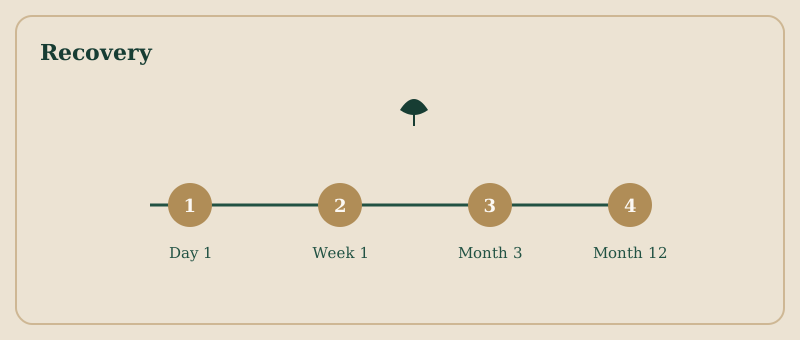
From around week two to four, many of the transplanted hairs shed. This is expected and does not mean the transplant has failed — the follicle stays in place and enters a resting phase before new growth begins, usually around three to four months. Density typically builds from about six months, with the fuller result generally visible around twelve months and sometimes continuing to improve to eighteen.
This article is general information only and is not medical advice. Hair transplantation is a higher-risk non-surgical cosmetic procedure; recovery and results vary between individuals. Follow the personalised aftercare instructions provided by your treating doctor.
Book a consultation with Dr Alex or Dr Ranadi to discuss the procedure, aftercare and what to expect for your situation.
Book a consultation Email us