FUE vs FUT: What’s the Difference?
Two established techniques, two different trade-offs. Here’s how they compare — and why FUE is often preferred.
Two established techniques, two different trade-offs. Here’s how they compare — and why FUE is often preferred.
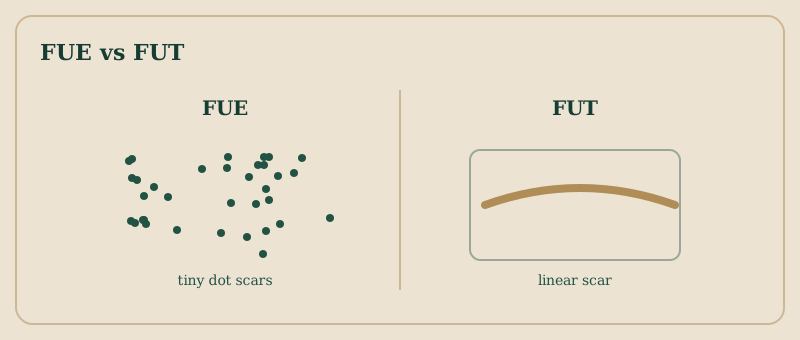
Both FUE and FUT move healthy follicles from the back and sides of the scalp (the donor area) to thinning areas. The difference is in how the follicles are harvested — and that one difference drives most of the trade-offs in scarring, recovery and suitability.
FUE (Follicular Unit Extraction) removes follicular units one at a time using tiny circular punches. FUT (Follicular Unit Transplantation), or the “strip” method, removes a thin strip of scalp from the donor area, which is then dissected into individual grafts under magnification, and the donor site is stitched closed.
This is the most talked-about difference. FUE leaves tiny, dot-like scars scattered across the donor area that are generally inconspicuous, even with fairly short hair. FUT leaves a single linear scar where the strip was taken; it can be concealed by hair worn over it but may be visible with very short styles.
FUE usually offers a quicker, more comfortable recovery, with many people back to everyday activities within a few days and no sutures to manage. FUT typically involves a slightly longer, more tender recovery because of the linear incision and stitches.
FUT can sometimes yield a large number of grafts in a single session and is occasionally favoured for extensive baldness. FUE is highly precise and avoids a linear scar, and is well suited to a great many cases, including those who want to wear their hair short. The right choice depends on your degree of hair loss, donor characteristics and goals.
Neither is universally better — they suit different situations. In practice, FUE has become the technique many patients prefer because of its minimal scarring and easier recovery, and it’s the method used at 3D Hair Transplant. That said, the honest answer is that the best approach for you depends on an individual assessment of your donor area, the extent of your hair loss and what you want to achieve.
This article is general information only and is not medical advice. A hair transplant is a higher-risk non-surgical cosmetic procedure; suitability and the appropriate technique are determined at a consultation with an AHPRA-registered doctor.
Book a consultation with Dr Alex or Dr Ranadi for an individual assessment and honest advice.
Book a consultation Email us